Voice as a second controller
In a game that keeps both hands busy, a fast and deep speech-to-intent model gives you control that buttons can't.
Command Crawler · 2026-11-25 · play it
What we want to show
Not a gimmick
Players reach for it mid-fight because it's the quickest way to do the thing, not because it's novel.
Doesn't replace buttons
Moving, fighting and the map stay on the controller. Voice adds options. It never takes control away.
Deep, not keywords
It understands what you mean in this game's terms: who, what and which one. It doesn't match a fixed phrase list.
Fast enough to matter
The action lands while the moment that called for it is still happening.
If any one of these fails, voice is a party trick.
The testbed: Command Crawler
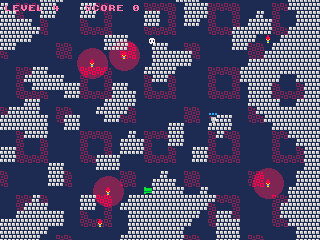
- Five heroes in a cave (barbarian, paladin, ranger, rogue, wizard), online, in the browser or on Linux.
- Gosohs drift through walls toward you. Skeles, blofires and gloms join on later levels.
- Stand by torches to stay safe. Carry the key to a door that won't hold still.
- Six health each. You can't walk with your sword out, so every swing is a decision.
It's built so that your hands never get a rest.
The party and their spells

Barbarian
taunt: nearby enemies all come for the barbarian.
"Taunt them!"

Paladin
heal: a heart flies to a hero.
revive: a fallen hero gets up.
shield: a hero takes no damage.
"Shield the barbarian."

Ranger
scout: markers point everyone to the key and the door.
"Where's the key?"

Rogue
vanish: only an outline is drawn; enemies lose track of the rogue.
"Vanish."

Wizard
freeze: enemies near a hero freeze.
blink: any hero to a hero, the key, the door or a torch, if it's on screen.
"Blink the rogue to the key."
A fallen hero lies on its side until the paladin revives it. Spells combine: taunt plus shield turns the barbarian into a wall the enemies bounce off.
Your hands are the bottleneck
Left thumb
Moving: dodging, kiting, getting back to the torch.
Right thumb
The sword, which means standing still. Timing is everything.
Your voice
Idle the whole game.
Every extra action on a button takes a thumb off one of the jobs on the left, or takes your eyes off the fight to find it in a menu.
Core control stays on the buttons. Voice takes the actions you'd otherwise lose to a menu.
When does voice beat buttons?
Say a voice command costs 1 to 2 presses: hold to talk, or toggle on and off.
| How many commands | Best with buttons | Voice | |
|---|
| 1 | one dedicated button: 1 press | 1 to 2 presses, plus speaking | buttons win |
| 2 to 4 | a menu button, then a face button: 2 presses | 1 to 2 presses, plus speaking | about even |
| 4 or more | nested menus or modifier combos: 3 or more presses, eyes on the menu, a thumb off the stick | still 1 to 2 presses, eyes on the fight | voice wins |
So the game needs more than four things you'd want to do mid-fight, beyond moving and swinging.
Depth multiplies the count
"The wizard needs a heart." That's one spell and one target.
Spells × targets × conditions
- Today: 8 spells, and with their targets that's 58 distinct commands. Blink alone is 5 heroes × 7 destinations.
- Then add targets defined by the game's state:
"heal whoever's lowest",
"shield the one with the key",
"freeze the skeles by the door".
Why it has to be deep
- A keyword spotter knows "heart" and "blue". It doesn't know "whoever's lowest".
- A menu can't list "the one with the key".
- Speech plus game state, resolved to an intent with real IDs, can.
Fast enough to matter
The bars run from 0 to 2.1 s. They measure the time from letting go of the talk key to the game receiving the function call. Today's stand-in is a cloud Deepgram Voice Agent (Flux, then gpt-4o-mini), measured in Command Crawler, 10 runs:
A gosoh reaches you from the edge of the screen in about 3 seconds. A heart that arrives 1.3 s late often arrives after the hero has fallen.
The model has to be small, tuned to this game, and running beside it.
Controls do what you said
What happened
With each hero's health in its context, the general-purpose LLM refused about half the time:
"Blue's already at full health!" (when the heroes were still coloured knights)
It refused even after we removed health from its context. It only reached 10 out of 10 once we told it outright that it knows nothing and must always call.
The rule
The model maps speech and state to an intent. The game decides whether it happens.
A tuned speech-to-intent model has no opinions to override. It returns the call, and the game's rules answer: "no wizard here", "next heart in 4 s".
Not a gimmick: the design rules
- Core control stays on buttons. Moving, the sword and the map. Voice never adds a step to those.
- Voice takes the long tail. Many targeted actions you'd want mid-fight, at four or more, where menus lose.
- It works mid-motion. No pause and no menu, and your eyes stay on the fight.
- Instant, visible feedback. You see your words on screen, and the heart leaving your hero. A spoken reply is too slow, so there isn't one.
- The game validates everything. Models propose, and the rules accept or reject.
The open problem: when is the game listening?
| How you start talking | Presses | What it costs |
|---|
| Hold to talk (today) | 1, held | A finger or thumb is busy for as long as you speak. |
| Push to toggle | 2 taps | No finger is held, but it costs 2 presses, the same as a two-press menu. It only wins at four or more commands. |
| Tap, then the model ends the turn | 1 tap | End-of-turn detection has to be fast and reliable. |
| Always listening | 0 | It has to tell game commands from talk at the table. A false trigger in a fight is costly. |
We assume hold to talk for now. For the claim to hold, this has to be solved: activation has to cost less than the menu it replaces.
What exists today
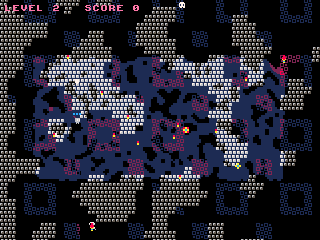
- Command Crawler: online, in the browser (two players side by side) and on Linux.
- Five heroes and eight spells (previous slides). Hold V and say it, or use the test keys 1–3.
- The screen shows your spells with their cooldowns, and something you could say.
- Function calling: one function per spell. The server checks the class, the target and the cooldown, and the result goes back to the model.
- The stand-in is a Deepgram Voice Agent, the same integration as data-wars. One module,
voice.gd, is where the on-device model plugs in.
Play it
Next
- Targets from game state: "lowest", "nearest", "the one with the key", "by the door".
- The on-device speech-to-intent model in place of the cloud agent, aiming for under 200 ms from end of speech to action.
- Measure: time to action and survival, with and without voice, on the same levels.
- Solve activation: tap with automatic end of turn, or always listening with addressee detection.